
Arkansas Death Records
Arkansas death records are official documents held by the Arkansas Department of Health, Vital Records Section in Little Rock. The state has kept death certificates since February 1914, with some records from Little Rock and Fort Smith going back to 1881. You can request certified copies for estate work, insurance claims, legal proceedings, or genealogy research. This page covers how to search for and obtain Arkansas death records from the state office, county-level sources, historical archives, and free online databases.
Arkansas Death Records Overview
Where to Find Arkansas Death Records
The Arkansas Department of Health keeps all death certificates for deaths that occurred in the state since February 1914. The Vital Records Section is the central repository. Their mailing address is 4815 West Markham Street, Slot 44, Little Rock, AR 72205. The recorded information line runs 24 hours a day at (501) 661-2336. It has current fee and processing details any time you call.
Some Little Rock and Fort Smith death records go back to 1881. City officials in those two communities kept local records before the state required it. For deaths before 1914 in other parts of Arkansas, you need to check other sources. County probate records, church registers, and old newspaper files often document deaths from that era. The Arkansas State Archives, managed by the Department of Arkansas Heritage, holds historical mortality data and records from every county. They are the main resource for pre-registration deaths outside the two older city collections.
Under Arkansas Code Title 20, Chapter 18, death records are not public records for 50 years after the date of death. The state office releases records only to qualifying individuals during that period. After 50 years, access rules are generally broader, and genealogical researchers have more options. If you are looking for a recent death, you must show your eligibility when you make the request.
The CDC's guide for Arkansas vital records is one of the most reliable quick-reference sources before you contact the state office. It lists the correct mailing address, fees, and exactly what to include in a request. Federal and state data match on all key details there.
The CDC Arkansas vital records page at cdc.gov details the full request process, address, and fee structure for obtaining Arkansas death certificates from the state.
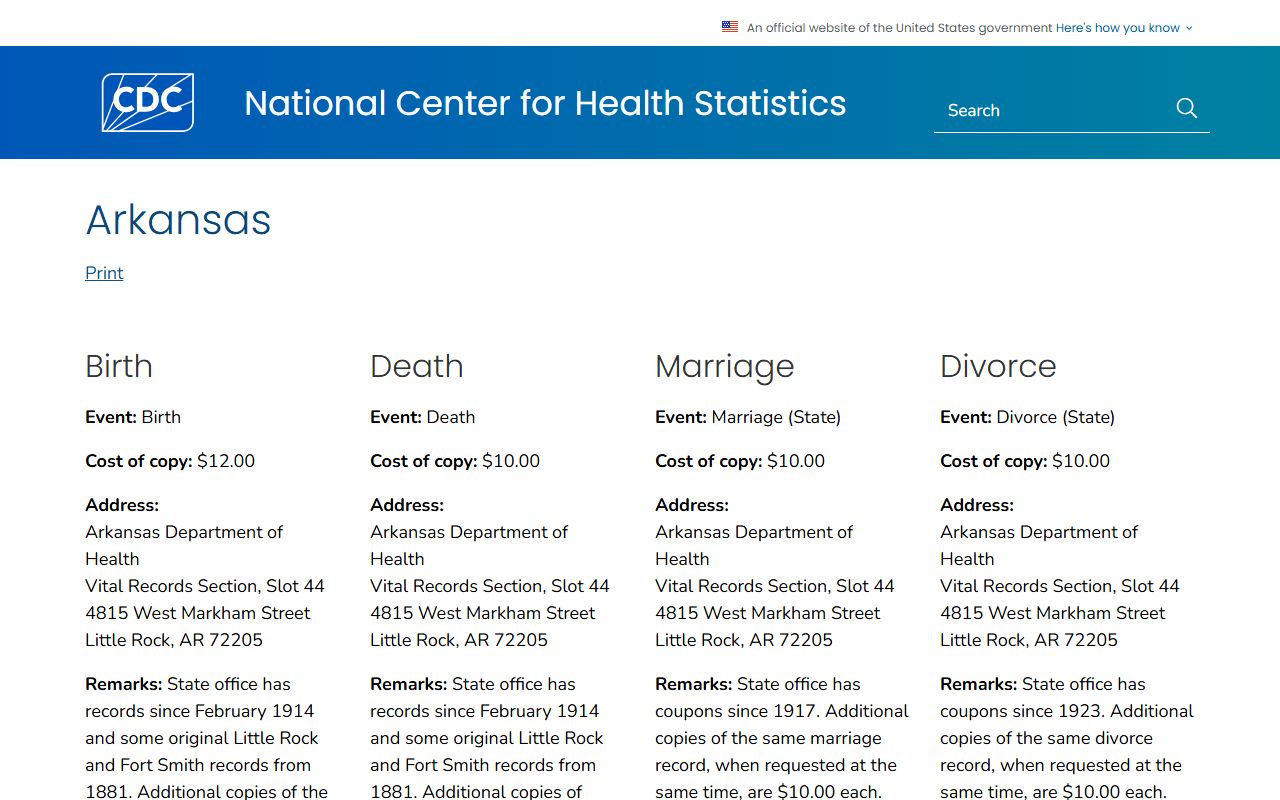
This federal guide confirms the Slot 44 mailing designation, the $10 fee for a first copy, and the in-person address at 4815 West Markham Street in Little Rock.
How to Request an Arkansas Death Certificate
Three options exist for requesting a certified death certificate in Arkansas. You can go in person, mail a request, or order online through VitalChek. Each works. They differ in cost and turnaround time.
In-person visits to the Little Rock office are fastest. Same-day service may be available if you arrive before 4:00 p.m. Office hours are 8:00 a.m. to 4:30 p.m., Monday through Friday. The office closes on state holidays. Bring a valid photo ID. Know the deceased's full legal name, date and place of death, date of birth, and Social Security number if you have it. The office can pull the record while you wait in most cases.
Mail requests go to: Arkansas Department of Health, Vital Records Section, Slot 44, 4815 West Markham Street, Little Rock, AR 72205. Include a completed application form, a photocopy of your government-issued photo ID, and payment by personal check or money order made payable to "Arkansas Department of Health." Do not mail cash. Processing typically takes 4 to 6 weeks. That timeline can stretch depending on request volume or if your application is incomplete. Incomplete applications are returned, which adds more time to the wait.
The VitalChek ordering portal at vitalchek.com is the exclusive online partner for the Arkansas Department of Health. Online orders process much faster than mail, usually within 3 to 5 business days. VitalChek accepts credit cards, which the mail-in process does not. They use LexisNexis electronic identity verification to confirm each requester's identity. The system is PCI-compliant and sends email tracking updates once your order ships. For urgent requests, you can also call VitalChek directly at (866) 209-9482.
VitalChek at vitalchek.com processes online orders for Arkansas death certificates directly through the state Department of Health system.
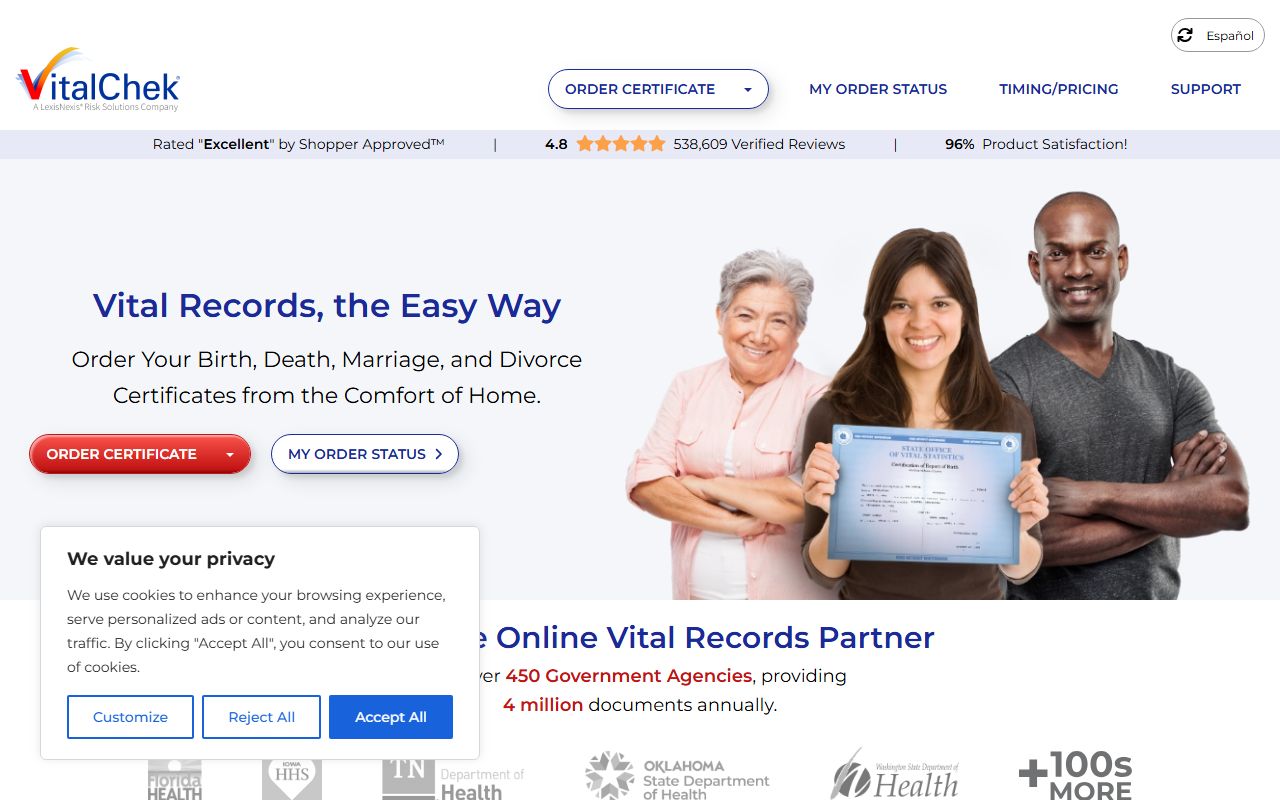
Orders placed through VitalChek ship in 3 to 5 business days, compared to 4 to 6 weeks for mail-in requests, and credit cards are accepted.
The WikiHow guide to Arkansas vital records outlines required documentation for requests, including the specific application fields for date of death, place of death, and the deceased's parents' names including mother's maiden name.
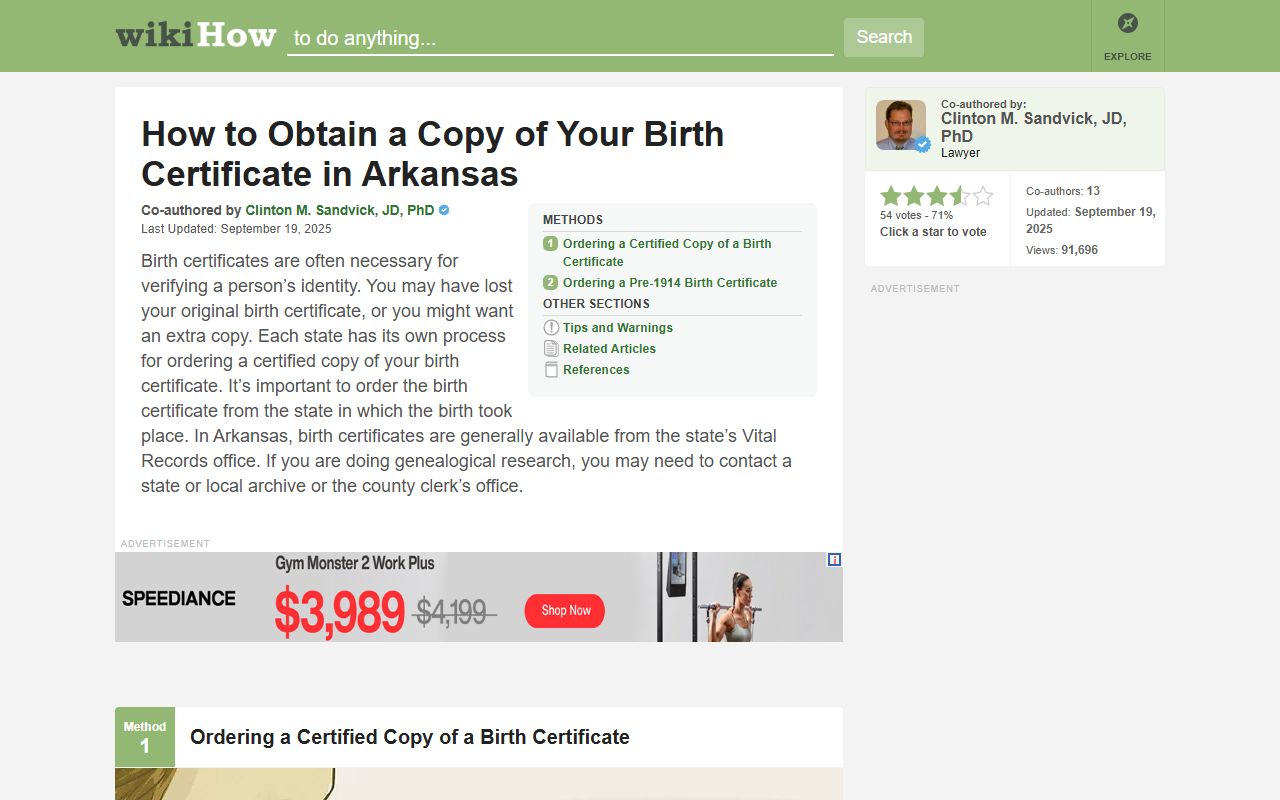
The guide also clarifies that academic research groups and third parties with a documented property interest may qualify to request death records under Arkansas eligibility rules.
Note: Every request requires a copy of your valid photo ID. A driver's license, state-issued ID, passport, or military ID all work. Requests without valid ID are returned unprocessed.
Arkansas Death Certificate Fees
A certified death certificate in Arkansas costs $10.00 for the first copy. Each additional copy of the same death record, when ordered at the same time, costs $8.00. These fees apply statewide. They do not vary by county. Whether you are in Pulaski County, Union County, or anywhere else in the state, the fee is the same.
Payment by mail must be a check or money order made out to "Arkansas Department of Health." Cash should never be sent by mail. Online orders through VitalChek add a service fee and shipping cost on top of the state fee. VitalChek's total cost depends on the shipping method you select. Call (501) 661-2336 to hear the current fee schedule on the recorded information line before you submit any payment.
The Arkansas General Assembly sets the framework for vital records fees through Arkansas Code Title 20. The current $10 fee has been stable, but legislative action can change it. Calling ahead takes less than a minute and prevents delays from sending the wrong amount.
The Arkansas General Assembly website at arkleg.state.ar.us is the official source for the statutes that govern vital records fees and access rules in the state.
Arkansas Code Title 20, Subtitle 2, Chapter 18 covers vital statistics law including death registration, certificate contents, fee structures, and who qualifies for access.
Note: Confirm the current fee by calling (501) 661-2336 before mailing payment, as fees can change by legislative action and the recorded line always has the latest rate.
What Arkansas Death Certificates Contain
An Arkansas death certificate includes the deceased's full legal name, date of death, county and city of death, date of birth, age at death, and Social Security number. It shows the cause of death and how death was classified: natural, accidental, homicide, suicide, or undetermined. The certifying signature from the attending physician, medical examiner, or coroner appears on every certificate. That signature confirms the medical facts are accurate to the best of the certifier's knowledge.
This document serves multiple legal and administrative purposes. Estate attorneys use certified copies to open probate and settle financial accounts. Life insurance companies require them before processing claims. Veterans' benefits programs need them to verify death. Banks close accounts and transfer funds based on certified copies with the official state seal. Courts accept only the certified version. Plain photocopies are not accepted for any of these purposes. When you order from the state office, every copy issued carries the seal and is considered a certified original.
Arkansas participates in the National Vital Statistics System run by the CDC's National Center for Health Statistics. The state reports mortality data to NVSS for national statistics. Arkansas also uses an electronic death registration system, which allows physicians and funeral directors to file certificates digitally. This reduces errors and makes filing faster compared to paper-only systems. The NVSS also produces reports on drug overdose deaths, infant mortality, and life expectancy using data collected from states including Arkansas.
The National Vital Statistics System at cdc.gov provides the national framework for death data collection that Arkansas feeds into with its own reporting.
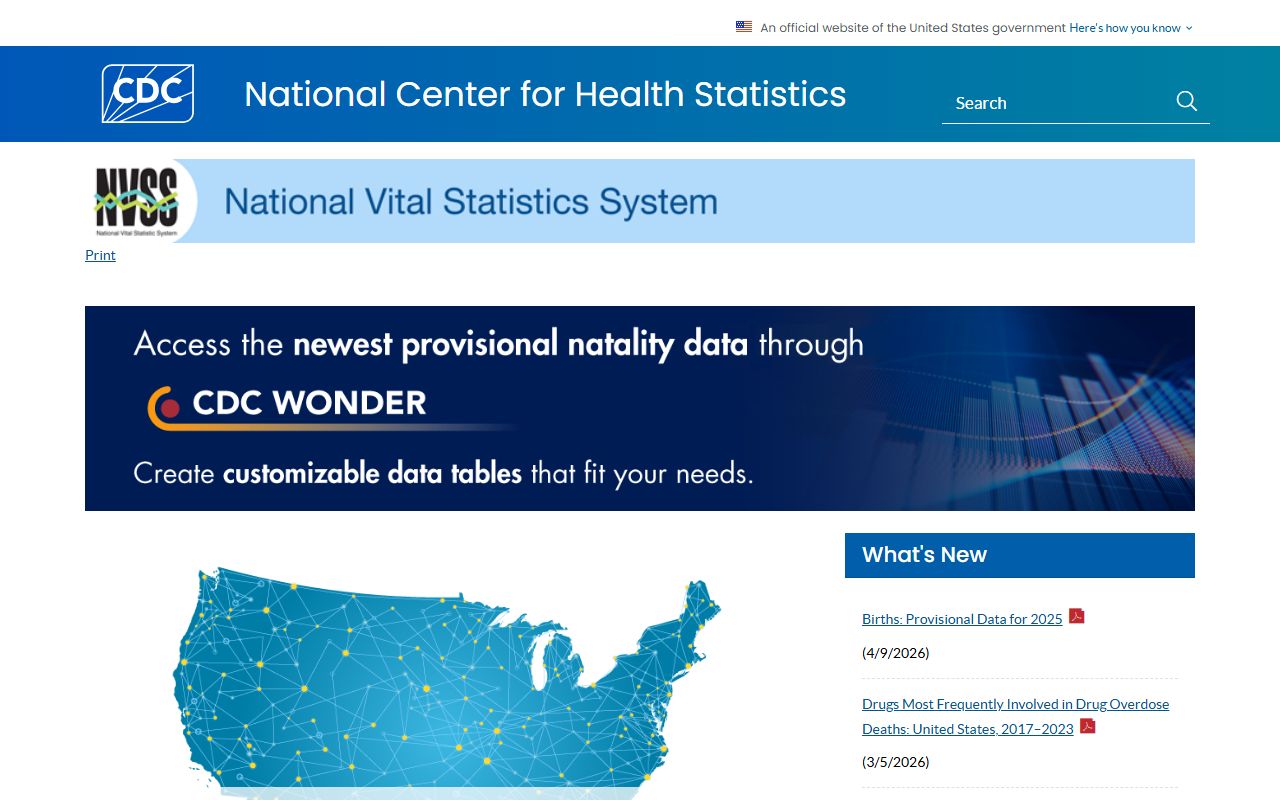
States like Arkansas report mortality data to NVSS, which publishes national statistics on causes of death, drug overdoses, and life expectancy drawn from every state's vital records system.
Who Can Request Arkansas Death Records
Arkansas restricts access to death records for 50 years after the death under Arkansas Code Title 20, Chapter 18. During that period, only certain people can get a certified copy. The rules exist to protect the privacy of the deceased and their family while still allowing legitimate access for legal and family purposes.
People who qualify to request a death record during the restricted period include the deceased's spouse, parent, child, or sibling. Legal representatives such as estate administrators and attorneys acting on behalf of an estate can request records. Funeral directors and medical professionals with a documented need qualify. Anyone who can show a direct personal or property right interest also meets the standard. Academic research groups with documented legitimate research purposes may also be entitled to access under Arkansas rules.
If your situation is unclear, call (501) 661-2336 before submitting your request. They can help you determine if you qualify before you spend time filling out an application. Third parties who cannot document a legal need will be denied. That denial is not reversible without new documentation showing your relationship or legal interest.
Note: For deaths older than 50 years, access is generally broader. Genealogical researchers have more options with records from those earlier periods, and databases like FamilySearch often hold digitized copies.
Probate Records and Court Filings
Death certificates are the primary vital record, but they are not the only documents tied to a death. When a person dies with property or debts, the estate goes through probate at the Circuit Court in their home county. Probate records are maintained by the Circuit Clerk in each of Arkansas's 75 counties. These records include petitions for estate administration, inventories of assets, creditor claims, and final distributions to heirs. They are public records and accessible at the courthouse.
The Pulaski County Clerk at pulaskiclerk.com, for example, handles small estate affidavits, real estate transfers, and court case lookups for Pulaski County residents, including matters that arise after a death. Every county clerk's office in Arkansas performs similar functions for their jurisdiction. Terri Hollingsworth serves as the Pulaski County Clerk and has made many records searchable online through that office's website.
The Arkansas Courts case information portal at caseinfo.arcourts.gov lets you search probate and estate cases by the name of the deceased or a party to the estate. The search is free and covers participating counties statewide. Not every county uploads all documents to the portal, but case status, docket entries, and party names are usually visible for cases that are in the system.
The Arkansas Courts case search at caseinfo.arcourts.gov provides free public access to probate and estate case information across Arkansas counties.
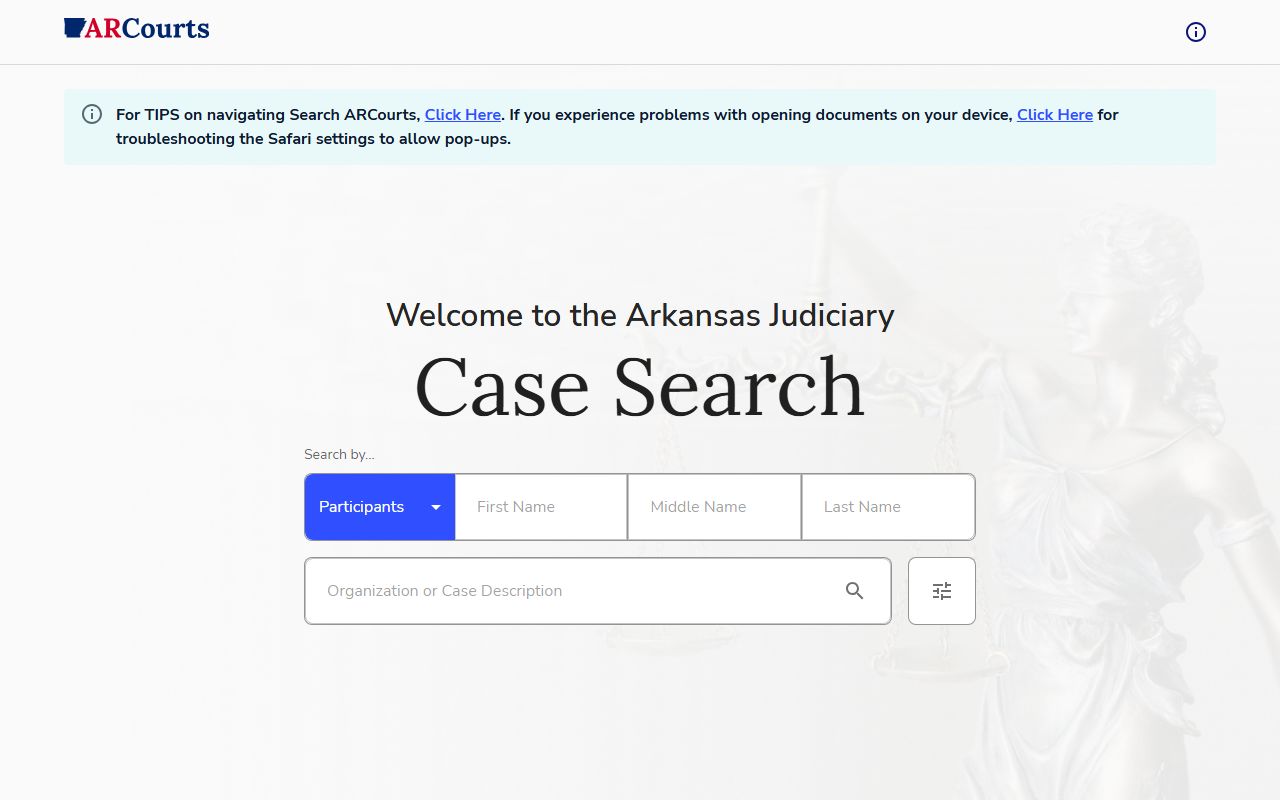
You can search by participant name to find estate and probate cases connected to a death in any participating Arkansas county through this free portal.
For Benton County specifically, the Benton County Circuit Clerk at bentoncountyar.gov handles probate dockets, land records related to estate transfers, and judicial sales of estate property. The office also offers a property fraud alert program that protects estate assets from fraudulent filings during administration. Benton County's Circuit Clerk serves as the ex-officio County Recorder, meaning real estate deed transfers after a death run through the same office.
The Benton County Circuit Clerk office at bentoncountyar.gov handles estate-related court filings, property records, and judicial sales for Benton County.
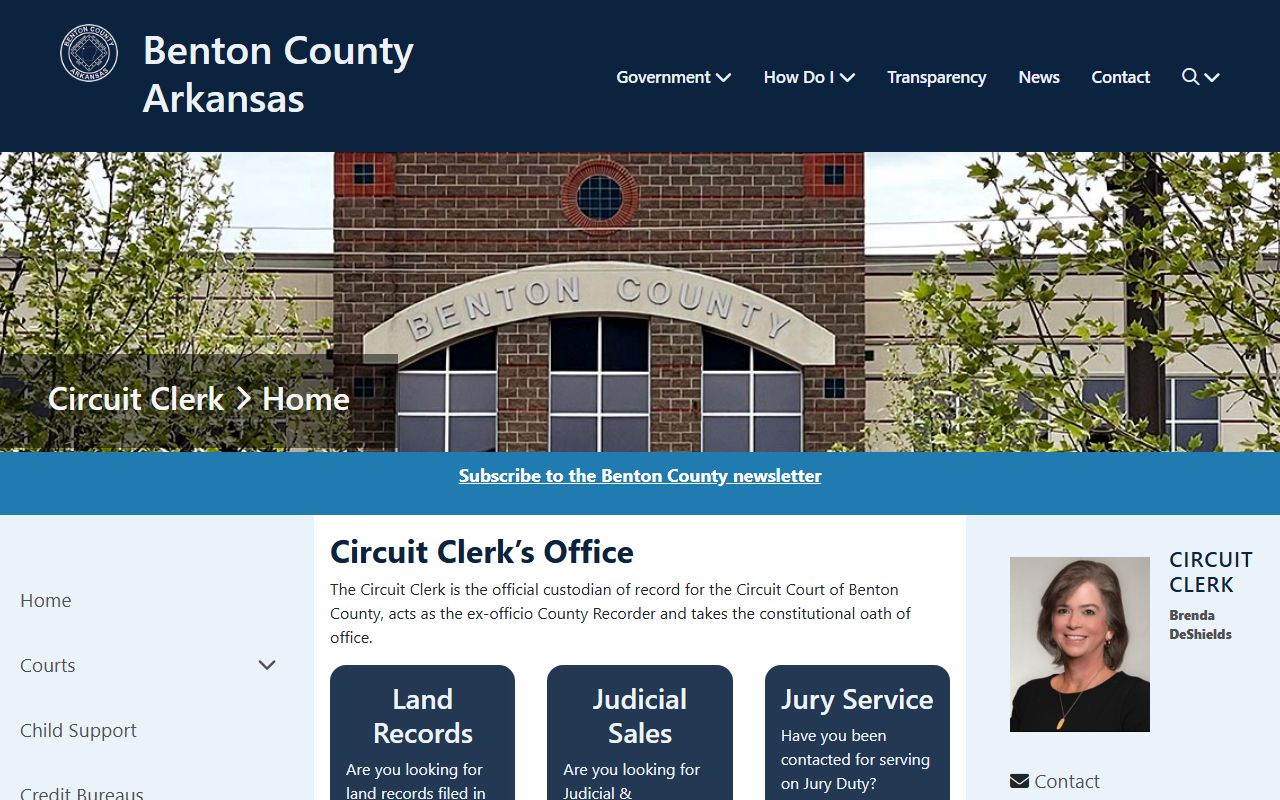
The Circuit Clerk office in Benton County, like all 75 Arkansas county clerk offices, serves as the official custodian of court records including estate and probate filings.
The Arkansas Supreme Court at arcourts.gov oversees training for attorneys in probate and estate matters statewide. Administrative orders from the court affect how probate records are maintained and accessed across all Arkansas counties. The court also posts information about court closures, which can affect your ability to access records in person on specific dates.
The Arkansas Supreme Court at arcourts.gov provides oversight of probate and estate court processes and posts statewide administrative orders that affect record access.
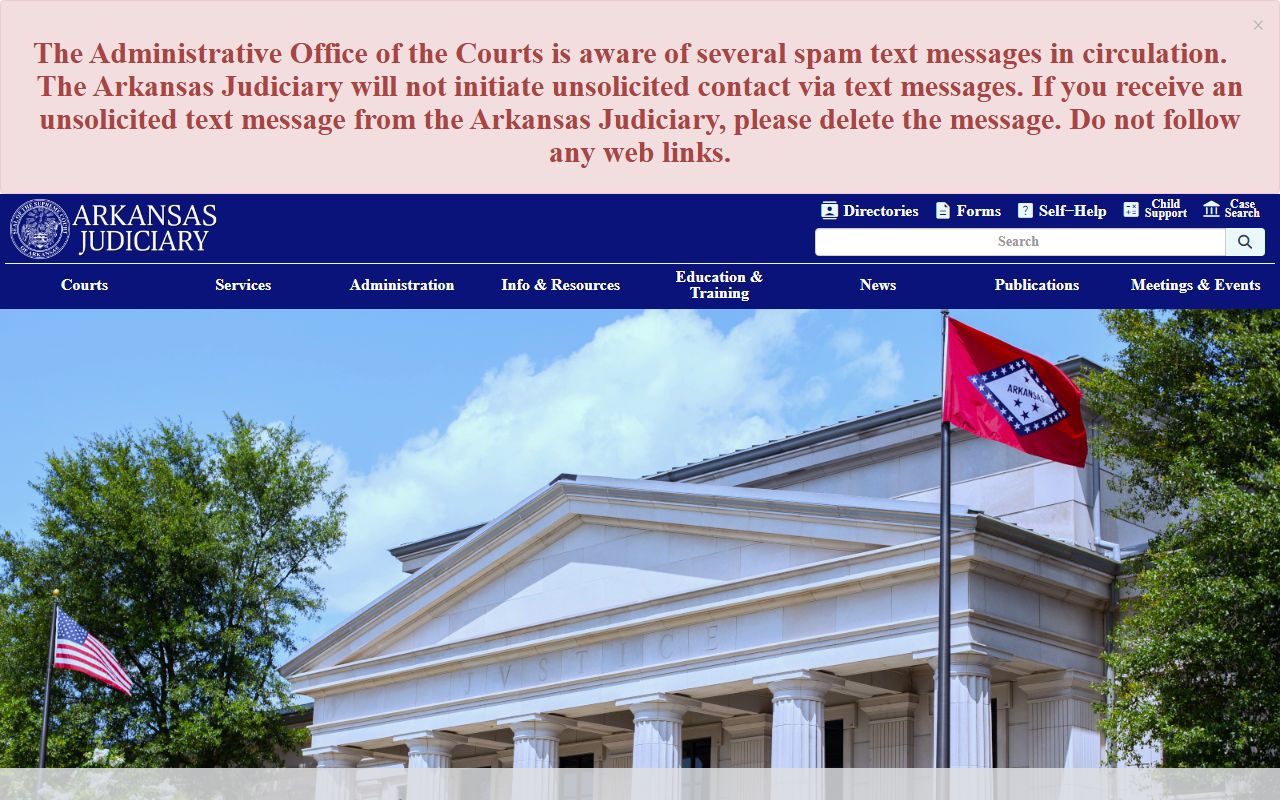
The court's administrative orders set standards for probate record-keeping and attorney qualifications for estate and guardianship matters across all Arkansas counties.
Historical Arkansas Death Records
Arkansas began mandatory statewide death registration in February 1914. Before that date, there is no centralized collection of death records at the state level. Historical mortality data comes from a mix of sources, each covering different time periods and geographic areas within the state.
The federal censuses taken in 1850, 1860, 1870, and 1880 each included mortality schedules. These schedules documented every person who died in the 12 months before the census was taken. They listed the deceased's name, age, cause of death, and place of origin. The records are not complete, but they cover most of the state and provide a starting point for pre-1914 research. These mortality schedules are held at the National Archives at archives.gov and through some genealogical databases. The National Archives also holds military pension records, which often contain death information for veterans and their spouses.
The Arkansas State Archives holds records from every county, including pre-1914 probate records, old county newspapers with death notices, and cemetery surveys. The Mosaic Templars Cultural Center in Little Rock preserves African American genealogical records that document deaths not always found in the main state collections. The Delta Cultural Center in Helena covers communities in the Delta region, where historical records can be harder to find through standard channels.
The Arkansas State Archives at arkansasheritage.com preserves historical records from all 75 counties including pre-1914 mortality data, probate records, and cemetery documentation.
The Department of Arkansas Heritage manages the State Archives, the Mosaic Templars Cultural Center, the Delta Cultural Center, and other institutions that hold historical mortality and genealogical records.
Church records are another pre-1914 source. Many Arkansas congregations kept birth, death, and marriage records going back to the early 1800s. These are not centralized anywhere, but county historical societies often know where specific church registers are held. Contact the Encyclopedia of Arkansas or local library systems for guidance on locating specific church collections.
The National Archives at archives.gov holds federal records including census mortality schedules, military service and pension records, and land records that may contain death information for Arkansas residents.

Researchers working on 19th-century Arkansas deaths will find the NARA Fort Worth regional facility covers Arkansas records and can help with requests for specific record sets.
Arkansas Death Records for Genealogy
Genealogical research into Arkansas deaths draws on multiple sources beyond the state vital records office. Death certificates, obituaries, cemetery records, probate files, and online databases all contribute different pieces of information. No single source has everything, but using several together usually produces a complete picture.
FamilySearch at familysearch.org maintains the world's largest free collection of genealogical records, including Arkansas death certificates going back to 1914, cemetery records, and county-level archives. New records are digitized and added regularly. A free account is all you need to view most images. The FamilySearch Wiki provides county-by-county guidance on what collections exist and what time periods they cover, which helps researchers know where to look when the main death certificate index does not have a match.
FamilySearch at familysearch.org provides free access to digitized Arkansas death records including state death certificates going back to 1914 and county-level genealogical collections.
FamilySearch collections for Arkansas include death certificates, cemetery transcriptions, obituaries, and probate records, with the FamilySearch Wiki explaining what is available for each county and time period.
Find a Grave at findagrave.com documents cemeteries across all 75 Arkansas counties. The database contains over 250 million memorial entries contributed by community volunteers. Each entry may include headstone photos, GPS coordinates for locating the gravesite, birth and death dates, and biographical notes added by relatives or researchers. For remote rural cemeteries with no printed map, the GPS coordinates make it possible to find markers in the field. Arkansas has extensive coverage on the site, with many county historical societies actively contributing cemetery documentation.
Find a Grave at findagrave.com documents cemeteries across every Arkansas county, with community-contributed memorial entries, headstone photos, and GPS coordinates for gravesites.
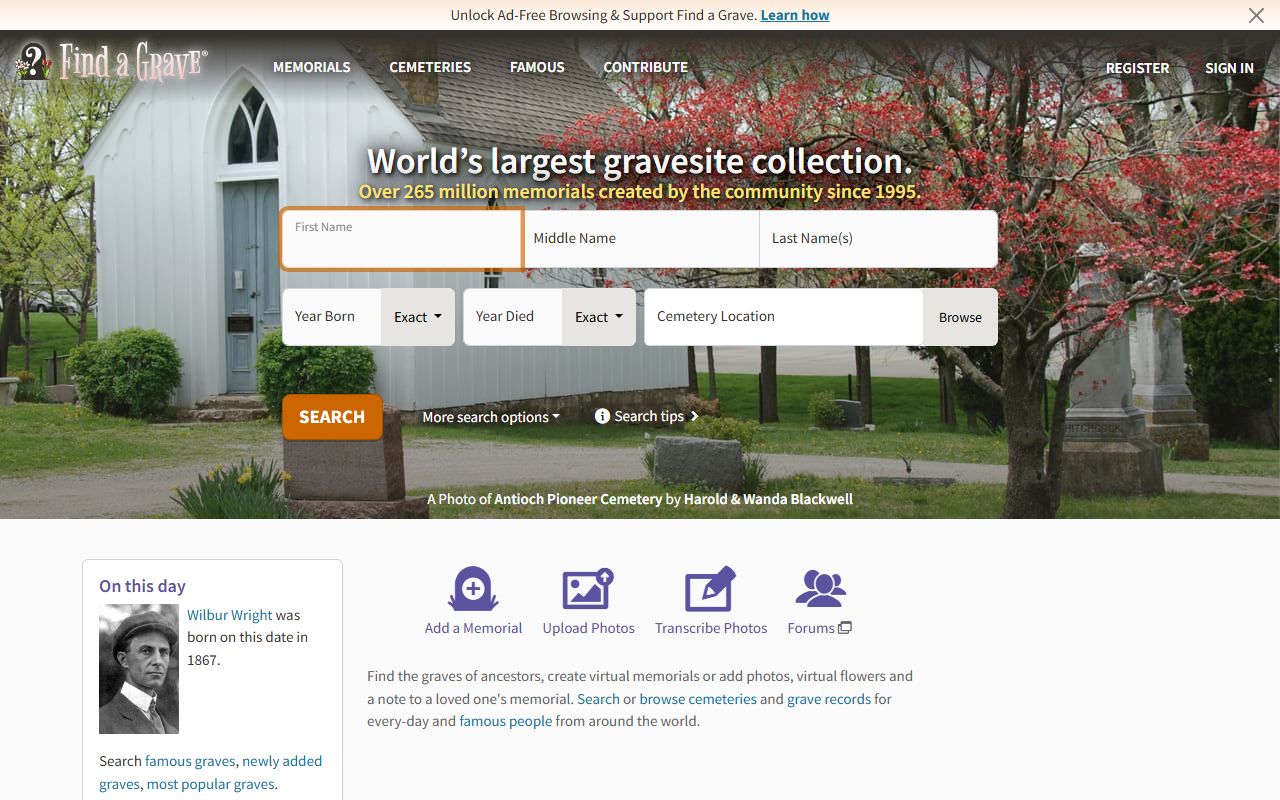
Find a Grave users can search by first name, last name, birth year, and death year, with range options to accommodate uncertain dates when researching Arkansas ancestors.
Legacy.com at legacy.com aggregates obituaries from nearly 10,000 newspaper and funeral home partners across the country. For Arkansas, their network includes the Arkansas Democrat-Gazette and regional papers statewide. Obituaries often contain details that death certificates do not: surviving family members, occupation, church membership, and funeral arrangements. These details help confirm the right person when a name is common and help extend a family tree by naming relatives.
Legacy.com at legacy.com aggregates obituaries from Arkansas newspapers including the Arkansas Democrat-Gazette and partners with funeral homes statewide to publish and archive death notices.

The platform's guest book feature allows family members to post memories and condolences alongside the obituary, creating a richer biographical record than the death certificate alone provides.
The Encyclopedia of Arkansas at encyclopediaofarkansas.net provides biographical entries for notable Arkansans, historical context for every county, and documentation of significant events that affected mortality across the state. It is free, authoritative, and maintained by the Central Arkansas Library System. County history entries help researchers understand settlement patterns and records availability for specific areas. The encyclopedia's media galleries include photographs of historic cemeteries and memorials across the state.
The Encyclopedia of Arkansas at encyclopediaofarkansas.net provides free historical context, county histories, and biographical entries covering Arkansas life and death across every region of the state.
Maintained by CALS, the encyclopedia is updated regularly and covers demographic history, notable deaths, cemetery practices, and the historical records landscape across all 75 counties.
The National Death Index, maintained through the CDC's National Vital Statistics System, covers deaths reported to the Social Security Administration since 1962. The Social Security Death Index is a subset of this data and provides name, birth year, death year, and last known state of residence. It is searchable through FamilySearch and other platforms without cost. For researchers looking at recent Arkansas deaths in the post-1962 era, this is a useful starting point before requesting a certified copy from the state.
Certified Copies and Apostille Services
Certified copies of Arkansas death certificates carry the official state seal. Courts, insurance companies, and government agencies require the certified version. A photocopy will not work for legal proceedings. When you order from the Vital Records Section, every copy they issue is certified and sealed. You do not need to do anything additional to get a certified copy. Just make sure to specify how many copies you need when placing your order, since additional copies of the same record are cheaper when ordered together.
For use outside the United States, death certificates often need apostille certification. This authentication tells foreign governments the document is a genuine official record from Arkansas. The Arkansas Secretary of State at sos.arkansas.gov handles apostille requests. The office is located in Room 256 at the State Capitol and can be reached at 501-682-1010. Apostilles are common when an estate includes foreign assets, when an insurance policy has an international carrier, or when a beneficiary lives abroad. The Secretary of State also provides notary and business record services that may come up during estate administration.
The Arkansas Secretary of State at sos.arkansas.gov handles apostille certification for Arkansas death certificates intended for use in foreign countries.
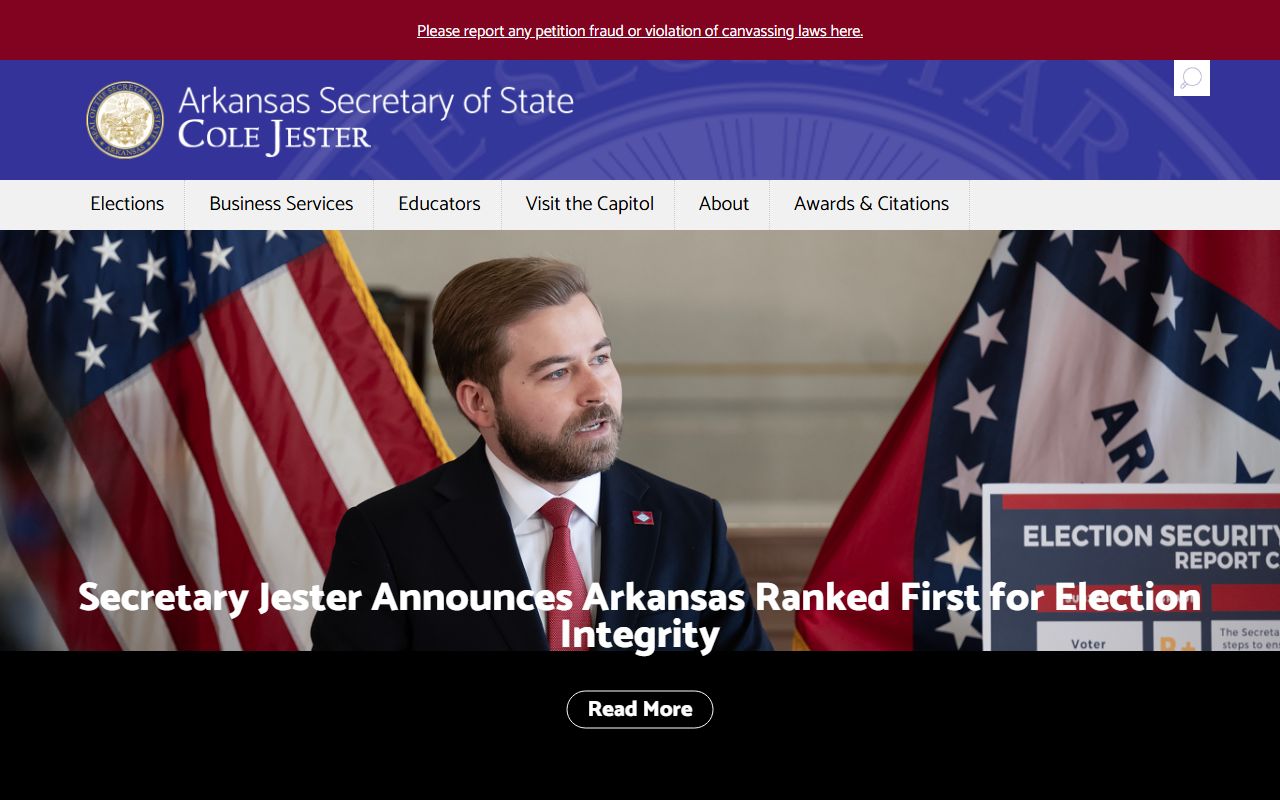
The Secretary of State's office in Room 256 at the State Capitol processes apostille requests and coordinates with the State Archives on historical record preservation.
If errors appear on a death certificate, corrections go through the Vital Records office. Supporting documentation is required, such as medical records or funeral home files that show the correct information. Processing takes more time than a standard request. Contact (501) 661-2336 to ask about specific documentation requirements before you submit an amendment request.
Death certificates issued in English only may need translation for use in some foreign jurisdictions. Arkansas does not provide translated certificates. You must arrange translation separately after obtaining the apostilled English version from the Secretary of State.
Census Records and Mortality Data
The US Census Bureau at census.gov provides demographic data for every Arkansas county through its QuickFacts tool. While the Census Bureau does not release personal death information for 72 years after collection, historical censuses are a major resource for genealogical death records research. The 1850 through 1885 censuses included mortality schedules, and the 1950 census became available in 2022.
The US Census Bureau at census.gov provides population data, demographic statistics, and access to historical census records that include mortality schedules from the 1850 through 1880 enumeration periods.

Census QuickFacts for each Arkansas county provide current population and demographic context that helps researchers understand communities where ancestors lived and died.
The GovInfo platform at govinfo.gov provides access to federal vital statistics reports dating back many decades. Historical NCHS mortality reports for Arkansas are searchable through GovInfo. These publications include cause-of-death breakdowns, age-specific mortality rates, and county-level data that can supplement genealogical research and provide context for historical death records from specific time periods.
The GovInfo platform at govinfo.gov hosts historical federal publications including mortality reports from the National Center for Health Statistics that cover Arkansas death statistics by cause, age, and county.
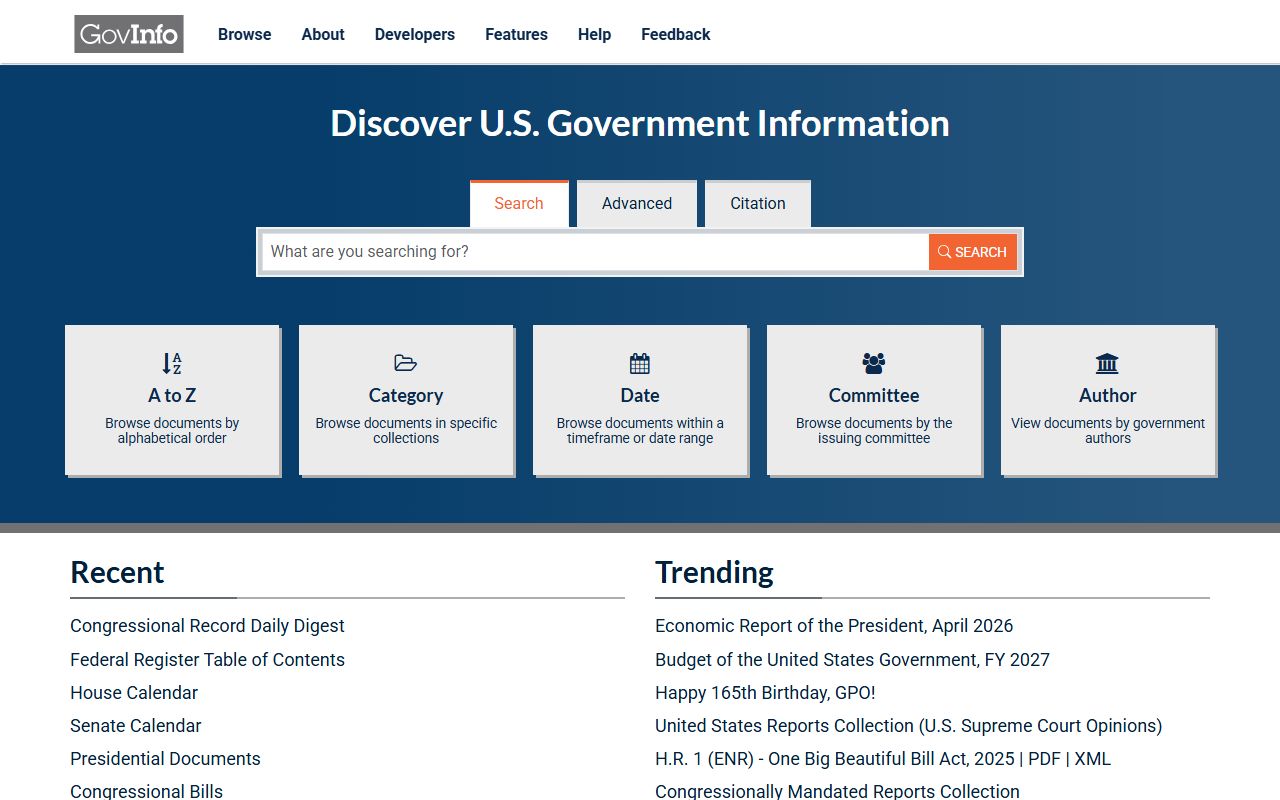
Researchers can search GovInfo for annual mortality reports that provide historical context for the time period when an ancestor died in Arkansas.
Death Records in Arkansas Cities
Death records for Arkansas city residents are maintained the same way as records for rural residents. All deaths occurring in any Arkansas city are filed with the state Vital Records Section and follow the same $10 fee and request process. There is no separate city-level vital records office in Arkansas. The state office handles everything.
Cities do have their own local resources that can supplement a search. Little Rock at littlerock.gov maintains city government records and can point residents toward county and state resources for death records. Little Rock is also where the state Vital Records office is located, making in-person requests easiest for residents of the capital area.
Little Rock city government at littlerock.gov serves as a local resource for Pulaski County residents seeking guidance on vital records, court services, and other government record access.

The state Vital Records office at 4815 West Markham Street is located in Little Rock, making in-person same-day service most practical for Pulaski County residents and anyone who can travel to the capital.
Pulaski County, which includes Little Rock, North Little Rock, Maumelle, and Jacksonville, has the highest volume of death records in the state. The Pulaski County Clerk handles probate filings, small estate affidavits, and real estate transfers that arise after a death in Pulaski County. Many records are searchable online through the clerk's website. Terri Hollingsworth serves as the Pulaski County Clerk.
The Pulaski County Clerk at pulaskiclerk.com handles post-death legal filings including small estate affidavits, court case lookups, and probate-related real estate records for Pulaski County.
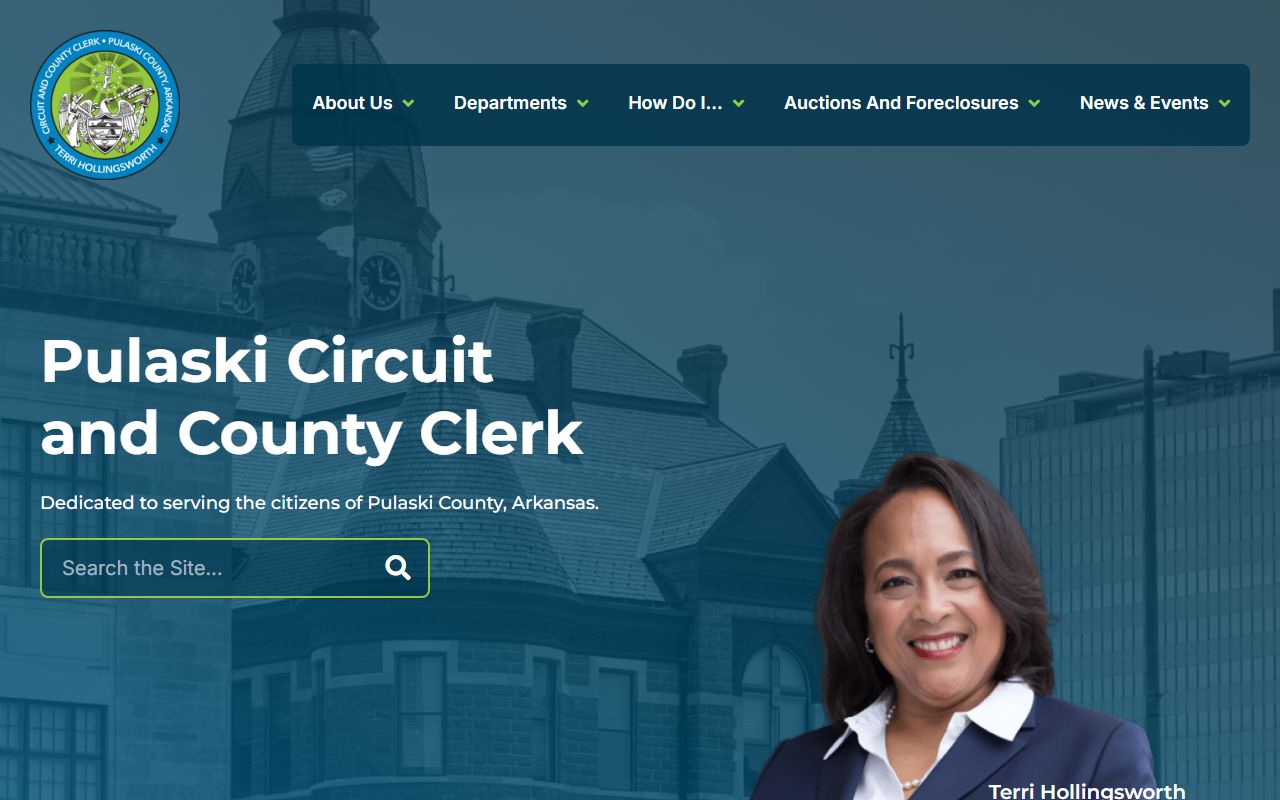
Pulaski County processes more vital events than any other Arkansas county due to its size, and the clerk's office has made many records available online to handle that volume efficiently.
Browse Arkansas Death Records by County
Each of Arkansas's 75 counties has its own probate court, cemetery records, and local resources tied to death records. Select a county to find specific access information, courthouse details, and genealogy resources for that area.
Death Records in Major Arkansas Cities
Residents of major Arkansas cities access death records through the state Department of Health and their local county courthouse. Select a city to find local access information and county resources for that area.